13/11/2026
Which Place for Mining, Refining, and Recycling in the Circular Life of Batteries?: The Cluster Hub attends BID 2026
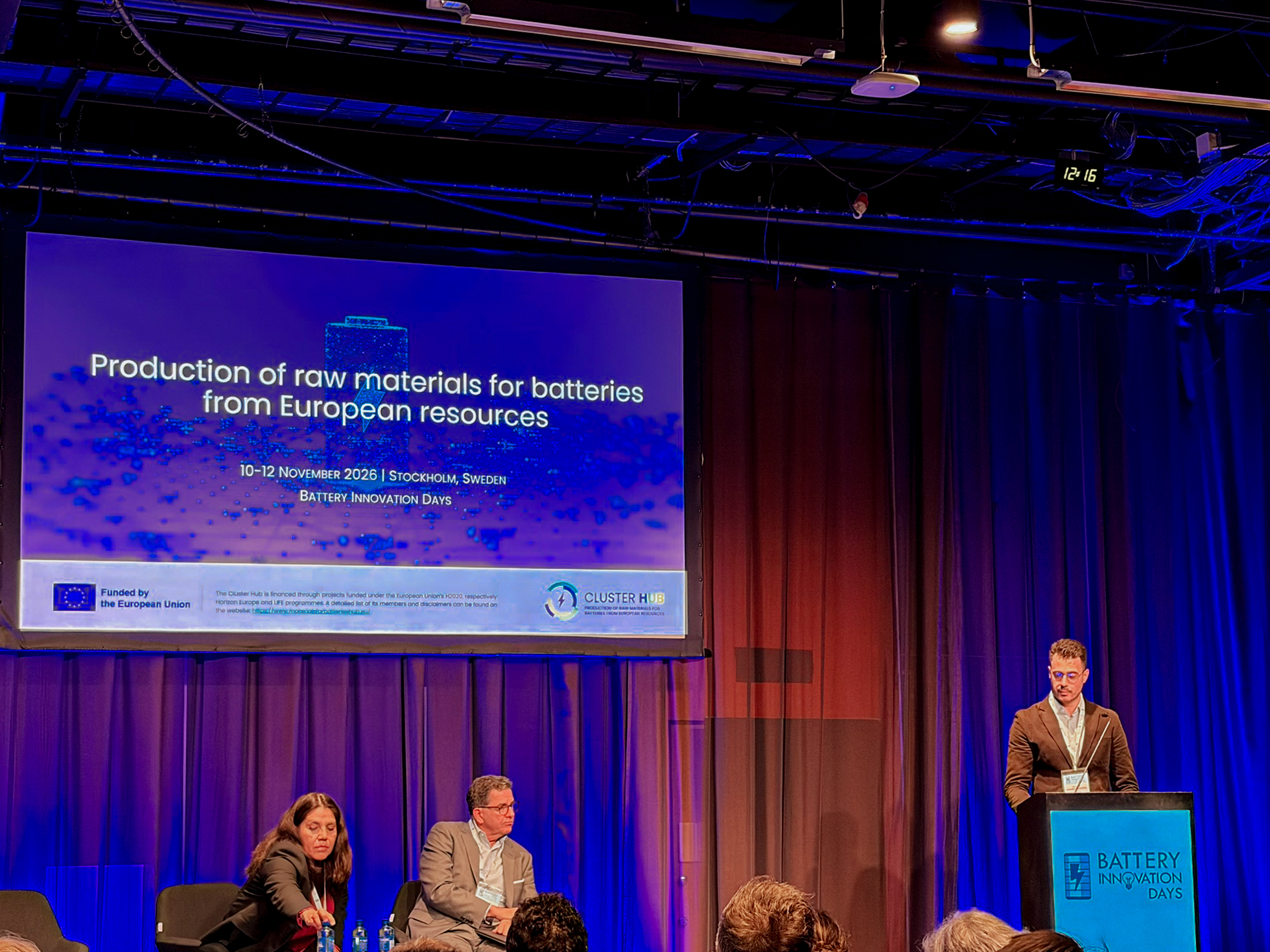
The Cluster Hub “Materials for Batteries from European Resources” participated in the sixth edition of Battery Innovation Days (BID), held on 11–12 November 2026 in Stockholm, Sweden – an event that gathers each year researchers, industry representatives and innovation stakeholders.
On 11 November, the Cluster Hub contributed to the session “Which Place for Mining, Refining, and Recycling in the Circular Life of Batteries?”, exploring the role of raw materials production, processing and recycling in building a more resilient and sustainable European battery industry.
The session brought together complementary perspectives from industry, research and regional innovation ecosystems.
Martin Phillips, CEO of Talga Group, addressed the role of natural graphite in battery anode production, drawing attention to the industrial challenges of developing a European supply chain. He highlighted graphite refining as one of the aspects at least as important as access to raw material. Producing battery-grade anode materials requires specialised shaping, purification and coating processes to meet demanding specifications of battery manufacturers. Margarita Mezzetti, researcher at Freiberg University, introduced the Li4LIFE initiative and its contribution to research and innovation along the lithium value chain. Diogo Fula, General Manager of Battery Cluster Portugal, presented the Portuguese battery ecosystem and its activities across the value chain, highlighting the importance of connecting stakeholders and capabilities.
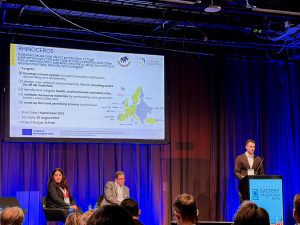
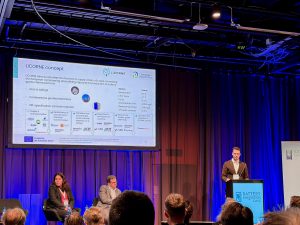
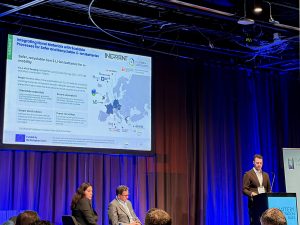
Representing the Cluster Hub, Álvaro Manjón Fernández from TECNALIA illustrated how EU-funded research and innovation projects contribute to different stages of battery materials production and recovery. His presentation showcased developments from seven Cluster Hub projects focusing on different parts of the battery value chain: lithium extraction and refining, graphite processing, advanced battery materials and recycling technologies.
The session illustrated the importance of bringing together industrial perspectives, technological developments and collaborative initiatives. At the same time, it provided an opportunity to present the Cluster Hub’s activities alongside similar and complementary initiatives.
Cluster Hub participating projects:
RHINOCEROS – Advancing battery recycling technologies, from automated dismantling and pre-treatment to electrolyte recovery, metal extraction and the validation of recovered materials. The project has progressed towards pilot-scale operations, including a newly built hydrometallurgical pilot plant.
LiCORNE – Developing lithium recovery and refining processes for European ores, brines and secondary resources. Three pilot routes are undergoing optimisation and validation at TRL 5, with preliminary results demonstrating progress in extraction and purification technologies.
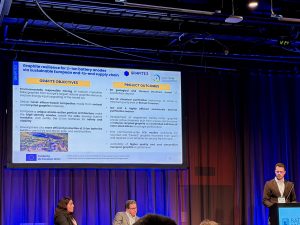
GR4FITE3 – Working towards a European graphite supply chain for lithium-ion battery anodes. The project combines natural and recycled graphite, develops purification and regeneration processes, and investigates their use in new anode materials.
CICERO – Developing circular hydrometallurgical processes for recovering and refining nickel, cobalt and manganese from tailings and intermediate materials, with the objective of enabling European production of materials for NMC cathodes.
LITHOS – Developing processing and refining technologies to produce battery-grade lithium hydroxide from European hard-rock resources, including deposits in Finland, Portugal and France.
EXCEED – Investigating the recovery of additional critical metals and valuable industrial minerals from European hard-rock lithium resources, aiming to reduce waste and improve the overall use of mined materials.
INERRANT – Developing safer and more recyclable lithium-ion battery components, including advanced electrodes, separators and electrolytes, while progressing towards larger battery cell prototypes and investigating recycling and second-life solutions.
© photos: Samuel Hoefman | Eurice & representative of INERRANT project

 SHARE ON

 Website managed by PNO Innovation